No items found.
The cost of a private MRI depends mainly on what is being scanned, how it is scanned, and what the price includes. Factors such as clinics and urgency can also affect the price. A quote for a standard scan in one body area won’t be the same for a urgent full-body scan for multiple areas.
Rather than looking at it as a single cost, it is essential to consider the bigger picture to determine how much your specific scan will cost.
Start With the Concern
MRI is used to find the cause of symptoms, check bones and organs, and see how well treatment is working. The body area and the scan protocol should be determined by what the clinician is looking for when trying to make a diagnosis. A broader scan is not automatically more useful, and scanning more areas usually costs more.
Determine What Affects the Price
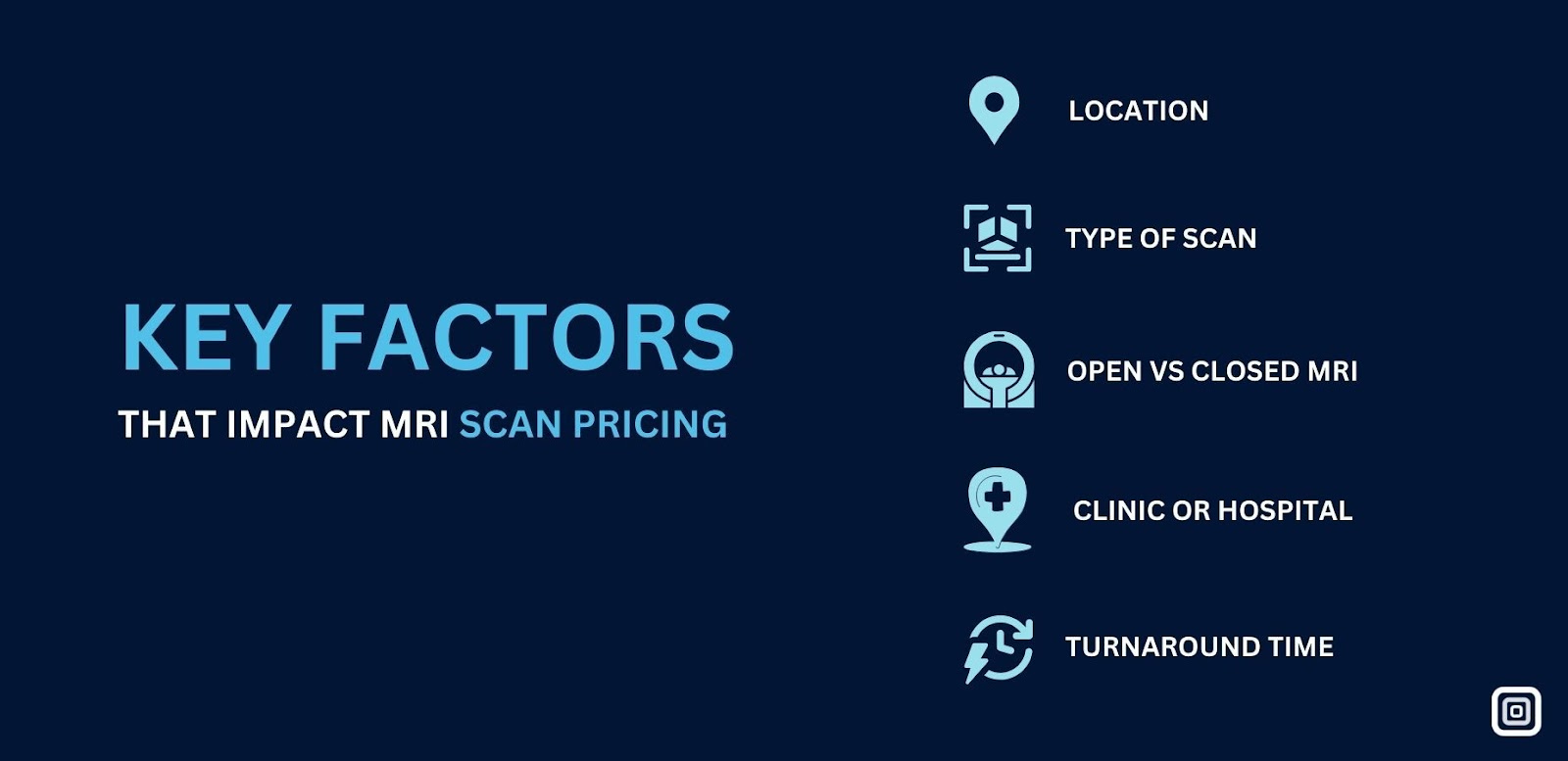
How many body areas are scanned. Each area is usually priced separately, so scanning your knee and your lower back costs more than scanning them individually. Check that the areas quoted match your symptoms.
Whether contrast dye is used. Some scans need an injection of contrast medium to show more detail. Contrast adds to the cost and needs its own safety checks. It isn't suitable in some circumstances, so it requires a proper clinical assessment first. You'll be asked about kidney problems and allergies, and you may need to wait for up to 30 minutes afterwards to check that you don't react. If contrast is proposed, ask why it's needed for your case.
Length and complexity of the scan. An MRI usually takes 15 minutes to an hour or sometimes longer, depending on the area and the protocol. Longer or more specialised protocols tend to cost more.
Extra support. If you're anxious or claustrophobic, you may be able to have a medicine to relax you. If you do, someone will need to take you home, and you shouldn't drive for 24 hours. Ask whether this is available, whether anti-anxiety medicine costs extra, and whether a different type of scanner is suitable for the images you need.
Where you have it. Prices vary between clinics and hospitals, and between parts of the country. Major cities have higher prices than smaller cities, which can significantly affect the cost.
Check What the Quote Includes
Two quotes for the same body area can cover very different things. Before paying, ask whether the price includes:
- A clinical review of whether this scan suits your symptoms
- The scan itself, including any contrast
- A formal report written by a radiologist
- Access to your images
- A route to discuss the findings with a clinician, and what happens if something needs follow-up
- What happens if the clinician decides a different test would be more suitable
If you have private health insurance, check whether your policy covers the scan and whether it needs a GP or specialist referral first.
For current prices, see our private MRI scan page. Prices change, so we keep them there rather than in this article.
MRI Scan Cost Calculator
To estimate the cost of an MRI scan, enter your postcode and the body part you need scanned into the GetScanned booking engine and you will be able to compare pricing between clinics across the country.
How the MRI Scan Cost Calculator Works
Our cost calculator helps you estimate the price of an MRI scan based on:
- Location: Enter your city or postcode to find the nearest clinics.
- Scan Type: Whether you need a head, spine, knee, or full-body MRI.
- Urgency: Choose how soon you need the scan to get a more accurate estimate.
Benefits of Using the MRI Scan Cost Calculator
- Price Comparisons: Easily compare prices between local clinics.
- Convenience: Find available appointments that fit your schedule.
- Custom Estimates: Get an estimate tailored to your specific medical needs.
NHS and Private MRI

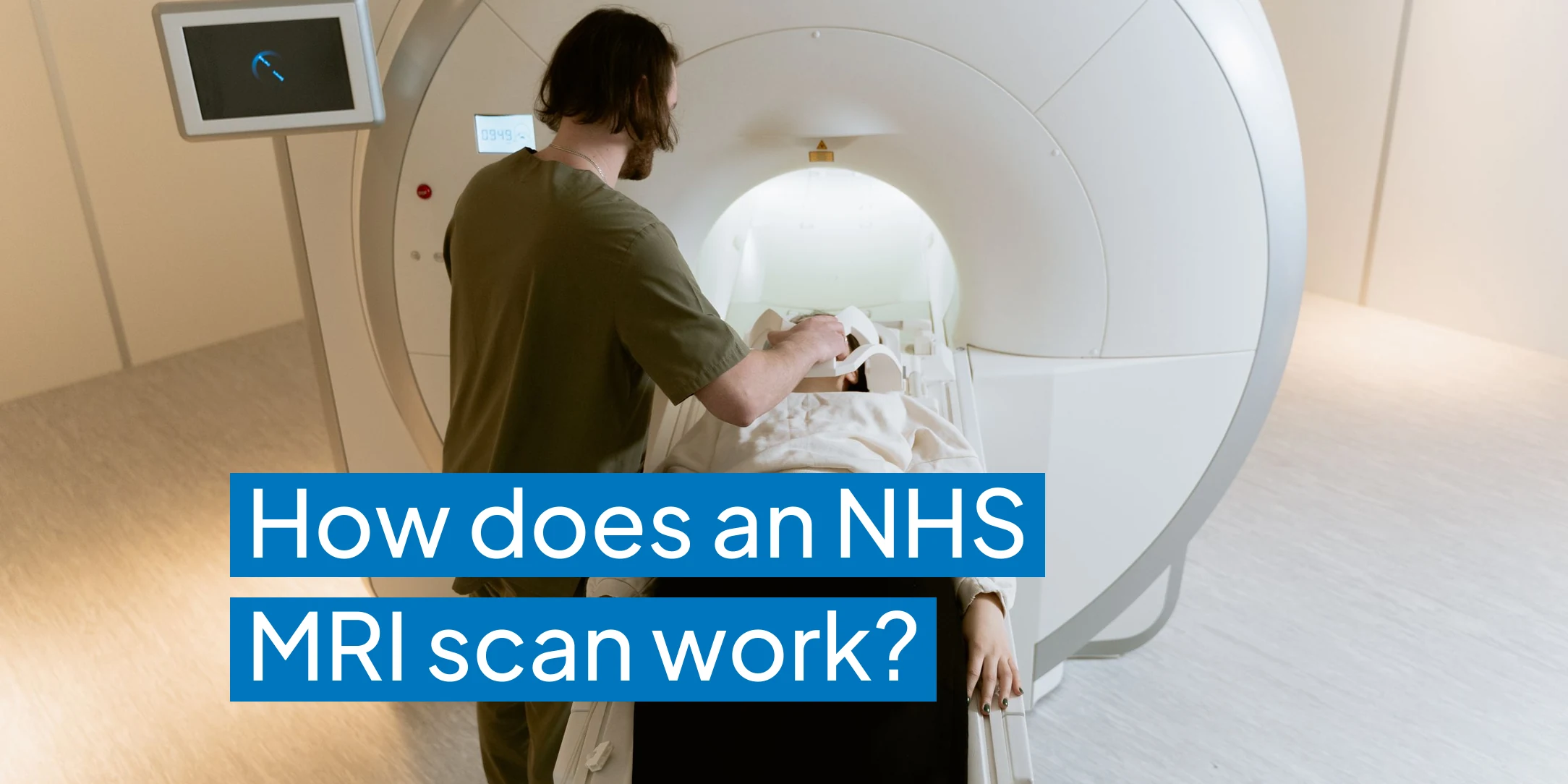
On the NHS, an MRI is free with a referral. A radiologist reviews the images and writes to the doctor who referred you. Results usually take 1 to 2 weeks, and you may need a follow-up appointment to discuss them.
Waiting times for the scan itself vary. The NHS standard is that fewer than 1% of patients should wait six weeks or more for a diagnostic test such as MRI. In July 2026, this standard was not met for any of the 15 tests it covers.
Paying for a private scan doesn't affect your right to NHS care. NHS care must stay free even if you choose to pay for something privately, but private and NHS care are kept separate. A private report doesn't decide what an NHS clinician will do next. If an NHS team is already involved in your care, ask how they will receive and assess private images before you book.
Conclusion
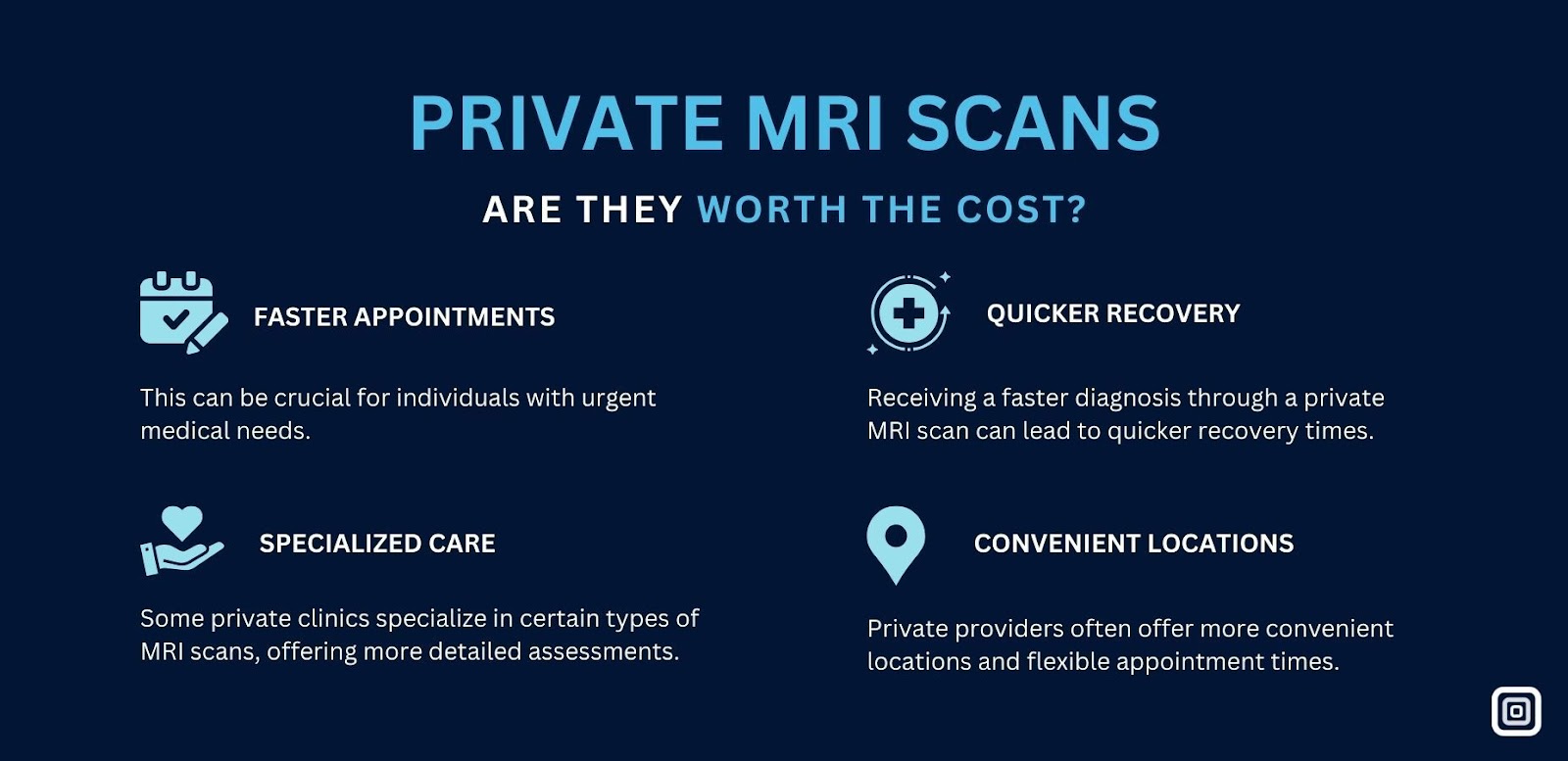
While private scans offer many benefits, including reduced waiting times, the NHS can be an affordable route. Making the decision on which is best comes down to your personal situation, medical needs, finances, and even region.
To find out more about how GetScanned private MRI costs work, view our MRI Scan service page.
GetScanned Today
Thank you! Your submission has been received!
Oops! Something went wrong while submitting the form.
FAQ
What is the average cost of an MRI scan in the UK?
The average cost ranges from around £299 up to £2,000+, depending on factors like location, and the body part being scanned.
What factors influence the cost of an MRI scan?
Location, type of scan, and urgency all play a significant role in determining the price.
Is there a difference between NHS and private MRI scan costs?
Yes, NHS scans are typically free but may have long wait times, while private scans offer faster appointments at a higher cost.
Can I use an MRI scan cost calculator to estimate my costs?
Yes, our MRI Scan Cost Calculator can provide a tailored estimate based on your location, scan type, and urgency.
Sources
NHS. MRI scan. Last reviewed 11 September 2025.
Clinical Imaging Board (RCR, SCoR, IPEM). Self-referral for MRI examination: position statement. August 2021.
NHS England Digital. Diagnostics Waiting Times and Activity (DM01).
NHS England. Diagnostic Waiting Times and Activity: statistical report, July 2026.
Department of Health and Social Care. NHS patients who wish to pay for additional private care. 2009.