No items found.
Waiting for your MRI results can be stressful, especially when you are searching for answers. Knowing what to expect helps reduce this anxiety, whether booking scans privately or through the NHS.
Once your scan has been done, a radiologist interprets the images and creates an MRI report highlighting any abnormality. If the findings are concerning, your GP may advise you on the next steps for further diagnosis or treatment.
It is important to know that getting your MRI results can take a few weeks because the radiologist has to go through multiple layers of images. Waiting times may vary between NHS and private services.
The NHS says people usually get their MRI results within one to two weeks of their scan as there may be a backlog due to demand. Waiting for the scan itself is often the longer part. In England in March 2026, the time from the MRI request to the scan taking place was roughly 22 days, and the time from scan to report being issued was three days. Hearing your results can take longer, because the report goes to your doctor first.
On the other hand, urgent MRI scans are prioritised, often delivering results within 24 to 48 hours. Urgent scans are usually reserved for severe conditions or tumours where immediate diagnosis is essential to begin treatment. While urgent cases get processed faster, factors like specialist availability and the complexity of the scan can still impact the timeline.
If your situation is urgent, you can get MRI scans faster by placing a special request with the NHS.
The Wait for a Scan vs the Wait for the Report
Waiting for MRI results includes two timeframes: the wait for the appointment and the wait for the report. This is when the radiologist reviews the images, issues a report, and discusses the findings.
NHS England measures these stages separately in its Diagnostic Imaging Dataset. For MRIs completed in March 2026, the average timeframe between scan request and the scan appointment was 22 days. Once the scan had taken place, the timeframe to issue the report was three days. These figures cover all types of MRI, including urgent and hospital inpatient scans, and include the report, without discussion with you to explain results. The wait periods are measured for England. Waits in Scotland, Wales, and Northern Ireland are measured differently.
Waiting list figures tell a related story. At the end of July 2026, the average person still waiting for an MRI in England had already waited about three weeks, and 21.4% had waited six weeks or longer, according to NHS England's diagnostic waiting times report.
For someone deciding whether to arrange a private MRI, the appointment date is often the more useful question to ask first. A shorter reporting time has less effect if the scan itself is weeks away.
What Happens After an MRI Scan?
After your scan, a radiologist reviews the images and writes a report for the referring healthcare provider. That clinician can go through the report with you and let you know whether you need a follow-up appointment. The Royal College of Radiologists says that the report should be clear and answer questions in the referral.
This is why the NHS guidance of one to two weeks for receiving results differs from the three-day median for issuing a report. The report may reach your clinician before you hear from them. If you have heard nothing after a few weeks, the NHS advises contacting the doctor who referred you.
If the radiologist sees something that needs prompt attention, there is a separate process to alert the referring doctor quickly.
Do Contrast and Non-Contrast MRIs Affect Results Processing Time?
There are two types of MRI scans: contrast and non-contrast. Non-contrast MRIs are the standard procedure and usually take less time. In some cases, your doctor may order a contrast MRI, which involves the injection of a special dye (gadolinium) that helps highlight specific areas in the images. While the scan itself may only take a few extra minutes, contrast can add complexity to the analysis, as it provides more detailed images.
Why Consider a Private MRI?
Some people choose to pay for an MRI because they want an appointment sooner or want to choose a location and date that works for them. The relevant comparison is the whole route from deciding to seek a scan to receiving your results, not the reporting stage alone. Availability and reporting arrangements depend on the scan and provider.
GetScanned lets you choose a scan type, body part and location, then book an available appointment online. You do not need an existing referral. After booking, a GP calls to review your symptoms and history, check the scan is the right one for your question, and issue the referral. A consultant radiologist then reviews the images and writes a report, and your GetScanned GP talks you through the results, so you hear what they mean from a doctor rather than just reading the report. Appointments are typically available within 48 hours of booking, and results are given within 48 hours of your scan.
If this route suits the question you need the MRI to address, the private MRI scan page shows the current booking options. A scan produces images for interpretation; the report and your clinical assessment determine what, if anything, should happen next.
Medical Conditions That Require an Urgent MRI Scan

Doctors often order an urgent MRI scan to diagnose or rule out severe medical conditions that need immediate treatment, such as head injuries, stroke symptoms, suspected tumours, spinal cord compression, severe back pain, or any other condition that requires fast diagnosis to avoid complications or permanent damage. This is why urgent scans are prioritised, whether scans are booked privately or through the NHS.
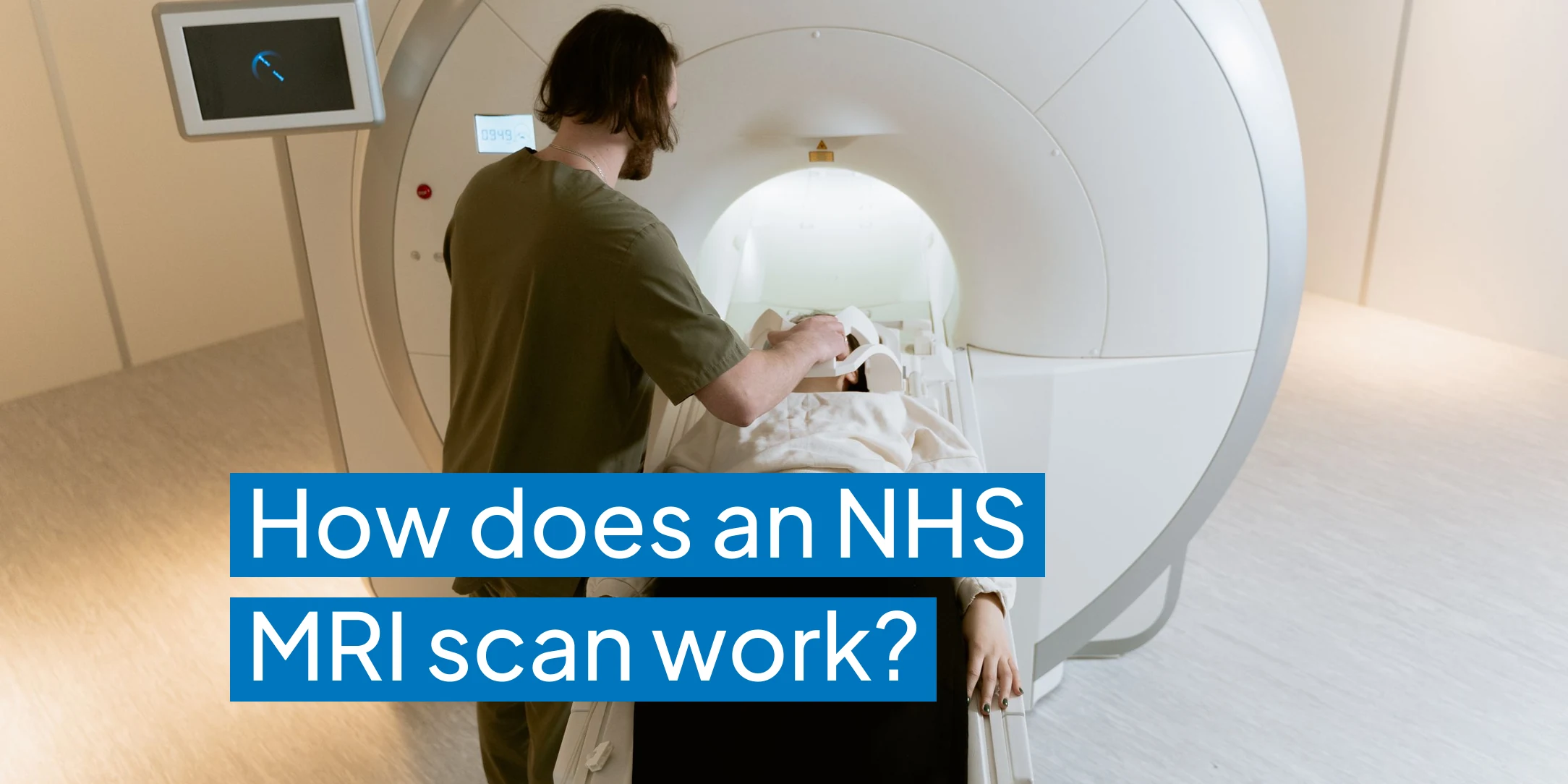
Overview of the MRI Scan Process
Understanding the process helps you plan ahead and know what to expect. A typical MRI involves the following steps:
- Before the scan, you'll be asked to remove any metal objects and change into a hospital gown.
- The scan involves lying on a flat table that slides into the MRI machine.
- The MRI machine uses powerful magnetic fields and radio waves to capture detailed images of internal structures.
- The procedure typically lasts between 30 and 60 minutes, depending on the area being examined and the use of a contrast agent.
- The machine produces loud noises during the scan, so ear protection is provided. However, you will be in continuous contact with the radiologist.
- The scan is completely painless, but it requires staying still to ensure clear images.
- After the scan, a radiologist will review the images and prepare a report for your doctor.
Average Duration of an MRI Scan

The duration of an MRI scan can vary based on the body part being examined and whether contrast is used. For example, a brain MRI typically takes 30 to 45 minutes, while a more comprehensive scan, such as a full-body MRI, could take over an hour.
- MRIs with contrast take slightly longer due to the time required to administer the dye and observe its effects.
- Additionally, scans for more detailed imaging, like those for cancer diagnosis, may take more time to capture all the necessary angles.
- While the scan usually lasts no more than an hour, you should also account for the time spent preparing for the procedure and changing afterwards.
What to Expect After Your Scan
After your MRI scan, the images are sent to a radiologist, who interprets them and prepares a report for your doctor. For routine cases, this can take anywhere from a few days to two weeks, depending on the complexity of the images and the availability of radiologists. If your scan is urgent, you can expect results within 24 to 48 hours, and your doctor will contact you as soon as possible to discuss any concerns. If your results are normal, you may not hear from your doctor immediately.
Speeding Up Your MRI Results on the NHS

Waiting for MRI results on the NHS can be stressful, especially with a longer time frame. Ways to speed up the process include:
- Regularly check in with your GP or healthcare provider so that your case remains on their radar.
- If your symptoms worsen or if there’s a concern that your condition might be more serious, speak with your doctor, as it may prioritise your scan.
- Consider private MRI scans if you are looking for quicker results, as private healthcare providers often offer faster scheduling and report times, sometimes within 24 hours.
Conclusion
Understanding the timelines and processes involved in receiving MRI results eases the anxiety of waiting. While urgent cases are prioritised, with results typically available within 24 to 48 hours, regular timelines are longer if you’re using the NHS. Factors like the type of scan, whether contrast is used, and your condition can also impact the time it takes to get your results.
If you're concerned about delays, staying in touch with your healthcare provider or considering private options will speed up the process.
Whether you’re going through the NHS or booking scans privately, getting accurate MRI results allows you to get the treatment as soon as possible.
With GetScanned, you can book a private MRI scan as soon as the next day, to get the answers you need without long waits.
GetScanned Today
Thank you! Your submission has been received!
Oops! Something went wrong while submitting the form.
FAQ
Can the radiographer give me my result on the day?
Usually, no. The radiographer performs the scan, while a radiologist reviews the images and prepares the report. Results can only be given by the radiologist.
How long does an MRI scan take to be analysed by a radiologist?
Routine NHS scans take a few days to 2 weeks. Urgent cases are prioritised and can be done in 24 to 48 hours. The NHS says the report normally goes to the doctor who referred you, and results may take longer.
What are common reasons for needing an urgent MRI scan?
The most common reason is if there are suspected tumours, head injuries, stroke symptoms, or severe back pain.
Will an MRI with contrast take longer to report?
The NHS says contrast may help show more detail in MRI images, but its MRI guidance gives no separate results timeline for scans with contrast. Ask your provider when to expect the report for your particular scan.
What if my symptoms change before the scan or result?
Tell your clinician caring for you if you need medical help that cannot wait for your GP, or contact NHS 111. Call 999 or go to A&E if you have:
- Sudden face drooping, arm weakness or difficulty speaking, which can be signs of a stroke.
- Back pain with numbness around your genitals or buttocks, new problems controlling your bladder or bowels, or weakness in your legs.
- Weakness or numbness that is getting rapidly worse.
A private MRI booking is never the route for emergency symptoms.
What should I do if I haven’t received my MRI results?
Contact your doctor or the imaging centre if you don’t get results within one to two weeks (or 24 to 48 hours for urgent cases).
Sources
NHS, MRI scan: patient results guidance, reporting route, follow up and contrast.
NHS England, Diagnostic Imaging Dataset Statistical Release, 23 July 2026: March 2026 MRI request to scan and scan to report medians, and what those measures include.
NHS England, Diagnostic Waiting Times and Activity, July 2026: MRI waiting list median and proportion already waiting six weeks or longer.
Royal College of Radiologists, Standards for interpretation and reporting of imaging investigations: the purpose and limitations of imaging reports.
Royal College of Radiologists, Recommendations on alerts and notification of imaging reports: communication of findings requiring prompt action.
GetScanned, How GetScanned works: booking, GP review and scan process.
NHS, When to use 111, and NHS, Symptoms of a stroke: routes to urgent and emergency help.