No items found.
Whether you are going through the NHS or booking your scan privately, knowing what to expect for MRI results time and how these pathways compare gives you a better idea of what to expect.
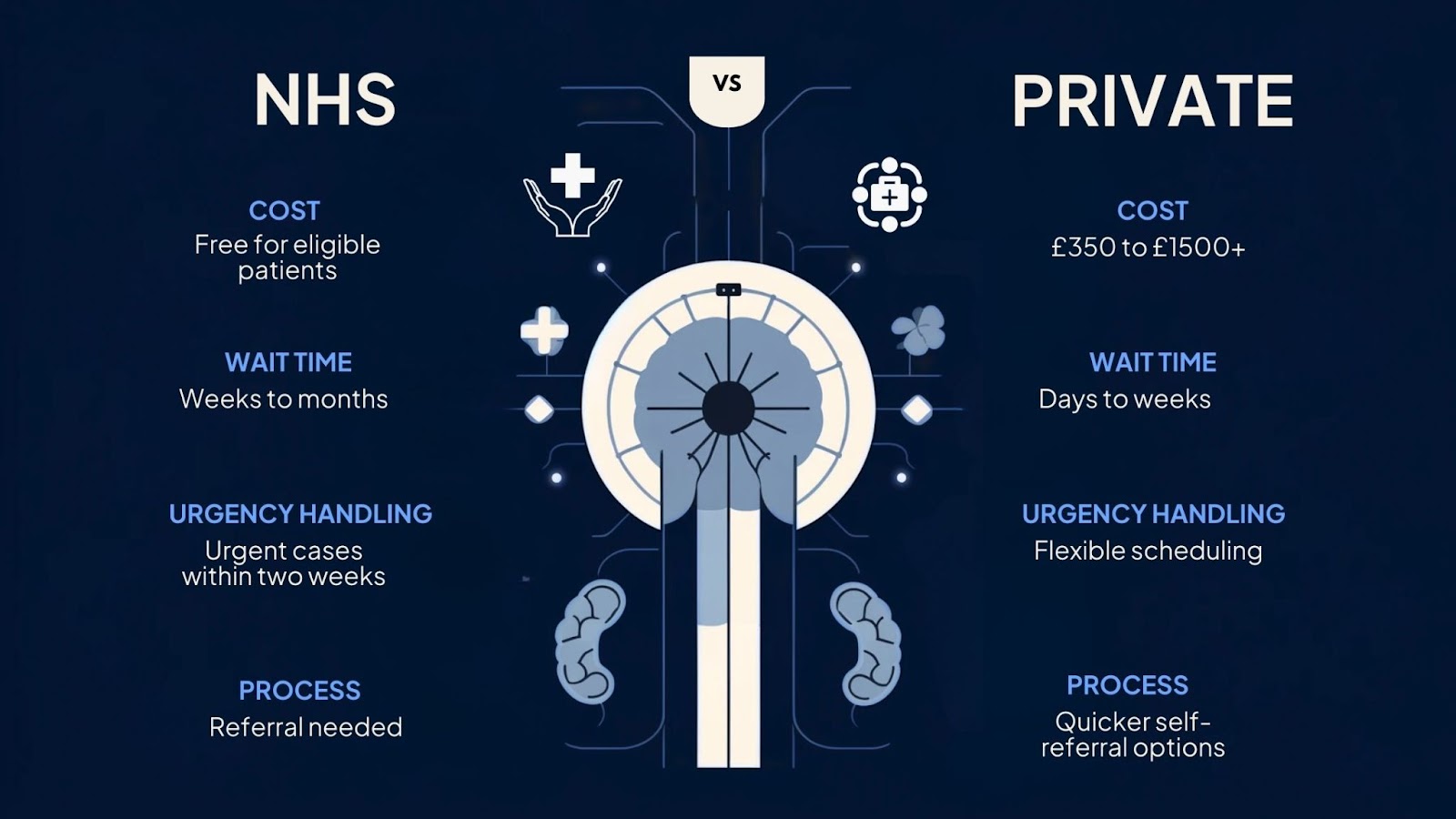
In a private healthcare setting, the turnaround time for receiving MRI scan results is typically a few days. On the NHS, this time is longer. However, the price factor makes it an option many consider. This is especially the case for those without insurance.
The NHS says that results usually take one to two weeks after the scan, but this is a general guide, which means that it may take longer in your case. The full journey also includes the wait to see a clinician, get the scan request and appointment, do the scan, discuss the report, and arrange your treatment.
Understanding The Full NHS MRI Journey

To begin the journey on the NHS, you may first need an appointment with a GP or specialist to decide whether an MRI is needed. NHS England's monthly diagnostic waiting time figures then count from the test request to the scan itself. These figures do not include the earlier consultation, the time to receive and discuss the report, or any onward treatment. A quoted scan wait is therefore only one part of the waiting time you may experience.
Local reporting and follow up also vary. Leeds Teaching Hospitals tells patients to contact their referrer if they have not received a result after four weeks. If you are waiting for an appointment, ask the referring team or imaging department about your specific request. If the scan has taken place, ask when the report will be discussed.
Who Gives You The MRI Results?

A radiologist examines the images and sends their report to your referring doctor, who will go through the report with you to explain the findings. The NHS says you may need a follow up appointment after your report is sent, and that your doctor should explain the findings and next steps. The radiographer who performs the scan cannot discuss the results, and has to send the findings to the radiologist.
The NHS App can show some test results, but hospital results may not always be shown, and private results usually will not be shown either. A report in an app should never be used to discuss findings, as results should be discussed with your doctor.
What if You Haven’t Heard Anything?
If a few weeks have passed since your NHS scan, the NHS advises contacting your referring doctor. You can ask whether the report has arrived, how the result will be explained, and whether a follow up appointment is needed. Do not wait for your results if your symptoms change and always seek clinical advice if you are concerned.
If you are unsure whether you need urgent help, NHS 111 can assess what to do. Call 999 or go to A&E if you have:
- Sudden face drooping, arm weakness or difficulty speaking, which can be signs of a stroke.
- Back pain with numbness around your genitals or buttocks, new problems controlling your bladder or bowels, or weakness in your legs.
- Weakness or numbness that is getting rapidly worse.
A private MRI booking is not the route for emergency symptoms.
What Changes if You Arrange a Private MRI?

With GetScanned, no GP referral is needed. A GetScanned doctor reviews your history and determines which type of body scan is needed for your symptoms. Your appointment is booked, and after the scan, GetScanned shares the radiologist's report and images with you, and your GetScanned GP talks you through the results. The images may help give you answers on your condition, but they do not answer every symptom or replace clinical assessment. You will be able to take reports to your primary care provider.
When comparing private quotes, factors that will determine the cost include the type of scan needed, whether contrast dye is used, the doctor’s review and referral, the radiologist's report and referral, and a discussion of results not bundled together.
The next steps depend on your care pathway. The NHS Essex Integrated Care Board advises that paying for private tests does not mean losing your place on the NHS waiting list, and tests can be repeated on the NHS.
According to trusts such as Norfolk and Norwich University Hospitals, you will need a GP referral when transferring from private to NHS care, however. Your NHS clinician accepting the referral can determine whether you can join a waiting list for scans or treatment. They may use a private report, review it further or request NHS imaging, depending on their findings and local policy.
The NHS also notes that your GP is not obliged to accept a specialist's recommendations, whether the specialist is private or NHS. You may choose to continue your care privately after diagnosis, which means paying for any further tests or treatment.
If you are considering a private MRI through GetScanned, our private MRI scan service page has more information on our current options and booking details to help you decide which option is the best choice. Before booking, check whether your NHS clinician will use any private imaging if you intend to return to NHS care.
Before Choosing a Route
If you already have an NHS request, find out whether you are waiting for the appointment, the report or the follow up conversation. If the scan has happened, ask the referring doctor about the result before arranging another scan. If you are considering private imaging, decide how the report will reach the clinician responsible for any onward care.
Gathering all the information you need to make the right decision will help to reduce the stress that goes with getting an MRI and waiting for your results. Once you have a better idea of how to proceed, you can plan your test and focus on getting the answers you need.
Conclusion
Having an MRI scan through either the NHS or privately depends on your personal situation. In cases where the NHS is slow and the need for a scan is immediate, private scans offer a fast way to get results.
The NHS provides low-cost or economical solutions, but these come with longer waiting periods and a longer path to results.
When deciding, consider the urgency of your medical situation, finances, and ability to wait longer. Whichever option you choose, the most important thing is getting answers from your MRI results so that you can begin your treatment plan.
GetScanned Today
Thank you! Your submission has been received!
Oops! Something went wrong while submitting the form.
FAQ
Is the NHS MRI safe?
MRI scans offered through NHS hospitals are considered safe and effective. The NHS facilities will test for any contraindications before conducting a scan.
Can I go back to the NHS after going private?
Yes, you can revert to NHS care after getting private MRI scans. Until you apply for private scans, all NHS services are available. It is still best to let your NHS facility know about any private treatments or scans you have done.
Who qualifies for the NHS scans?
All lawful and legally settled residents permanently living in the UK can access various NHS services. Non-residents like students or individuals on certain visas can also apply for NHS coverage in certain circumstances.
Can I request an MRI scan on the NHS?
Patients can get an MRI scan from the NHS with a GP or a hospital specialist referral. A healthcare worker will determine whether an MRI scan is needed for diagnostic or treatment planning purposes. The NHS then ranks and prioritises MRI scans based on urgency, medical necessity, and wait times.
Sources and what they support
NHS, MRI scan: the usual post scan results interval, radiologist reporting, follow up and advice to contact the referrer.
NHS App, viewing test results: limits on visibility of hospital and private results.
NHS 111: help when you are unsure whether you need urgent care.
NHS, Symptoms of a stroke: emergency red flags.
NHS Essex Integrated Care Board, going private: separate care pathways, unchanged NHS waiting list position and possible repeat testing.
NHS England, DM01 FAQs: the monthly request to test clock definition.
Leeds Teaching Hospitals, having an MRI scan: local advice to contact the referrer after four weeks without a result.
NHS, referrals for specialist care: clinical referral decisions and the GP's discretion over private recommendations.
Norfolk and Norwich University Hospitals access policy: referral and clinician decisions when moving from private to NHS care.